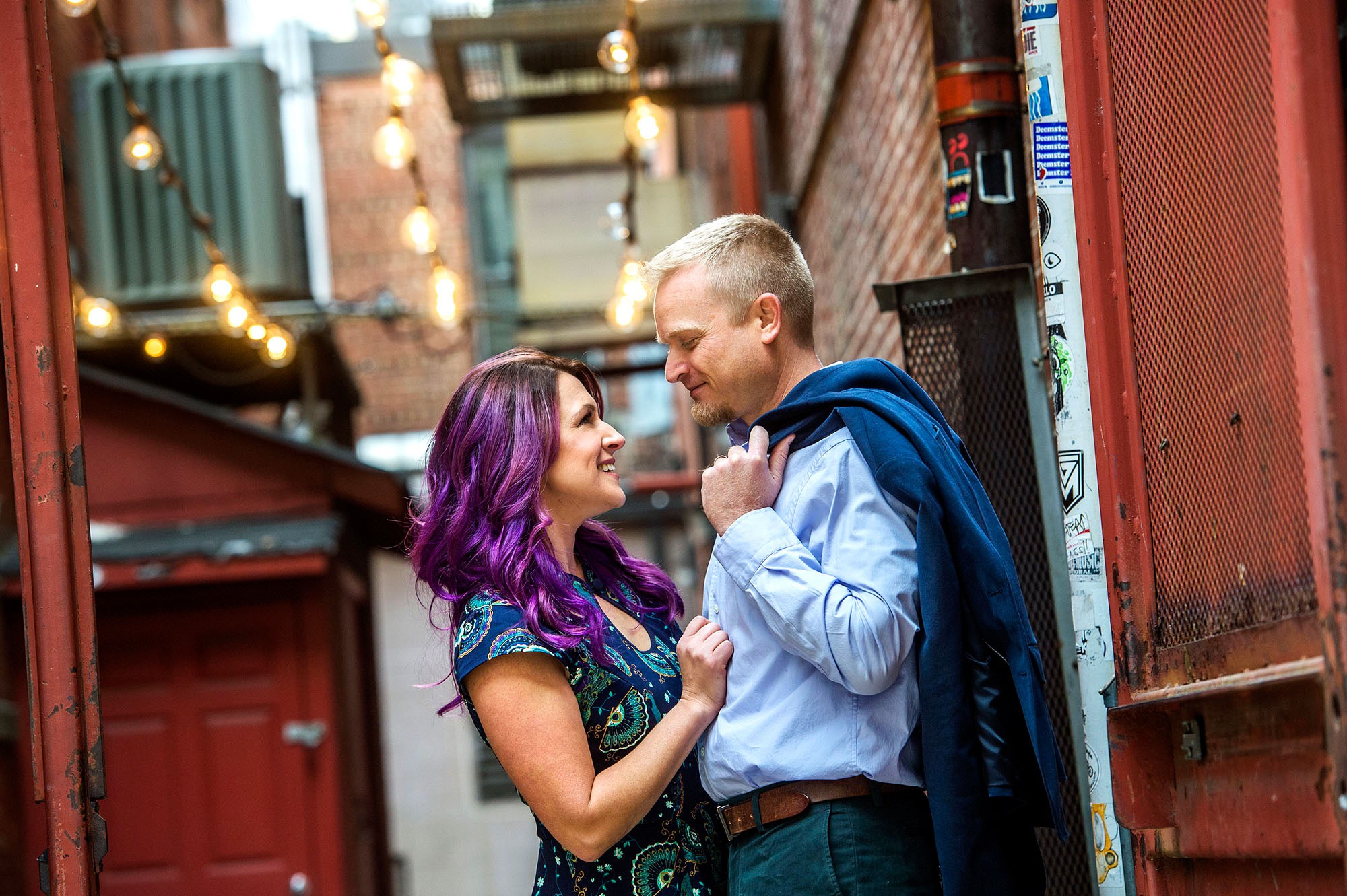
Almost every session opens with the same confession, usually within the first thirty seconds: "I'm so awkward in front of the camera." I've heard some version of it from executives, brides, teenagers, retirees — it doesn't matter who's standing in front of the lens. Nearly everyone believes they're the exception, the one person who genuinely can't take a good photo.
I've stopped treating that as a problem to fix. I've started treating it as information. It tells me exactly where to begin.
Give them something to do
Stiff expressions almost never come from a person's face. They come from a person's brain — specifically, from thinking about the fact that they're being photographed. The second someone becomes aware of the camera as an audience, their whole body tightens up in ways they can't consciously undo, no matter how many times you tell them to "just relax."
So I don't tell them to relax. I give them something to do instead. Walk toward me. Adjust a sleeve. Look out the window. Turn and say something to the person standing beside them. Small, ordinary, physical tasks — nothing that requires performance, just movement with a purpose.
Give the body a job, and the face relaxes on its own. It's almost automatic. The moment someone's attention shifts from "how do I look" to "which way was I supposed to walk," the tension drops out of their shoulders and jaw without them ever noticing it happened. I shoot constantly through those in-between beats — the walk, the adjustment, the half-turn nobody thought was the shot — and that's almost always where the real portrait lives. Not in the moment they were told to smile. In the moment right before or after, when they'd forgotten to.
Talk more than you shoot
The other half of the job happens with my mouth, not my hands. I keep up an easy conversation the entire time — about nothing in particular, whatever comes up, whatever keeps a person talking rather than posing. Because a genuine laugh lasts a fraction of a second, and you cannot pose it. Nobody can. The real thing only shows up when it's not being asked for.
My job isn't to manufacture that laugh directly — you can't order someone into genuine delight. My job is to create the conditions where it's likely to happen, and then simply be ready when it does. That means talking more than I shoot, watching more than I direct, and staying alert enough that when the real expression finally surfaces, I'm not fumbling with settings when it does.
By the end of a session, most people are surprised it's already over. They braced themselves for something long and uncomfortable, and instead the time passed talking about their dog or their weekend or whatever came up along the way. And they're usually even more surprised by how much they like the results — because the version of themselves in the gallery isn't the stiff, self-conscious person who walked in nervous. It's the person who forgot, for just long enough, that the camera was even there.
So if you're dreading your next photo session, know this: the goal was never to make you look like you weren't camera-shy. It was to get you talking, moving, and thinking about something else entirely — right up until the moment the shutter caught you being exactly yourself.