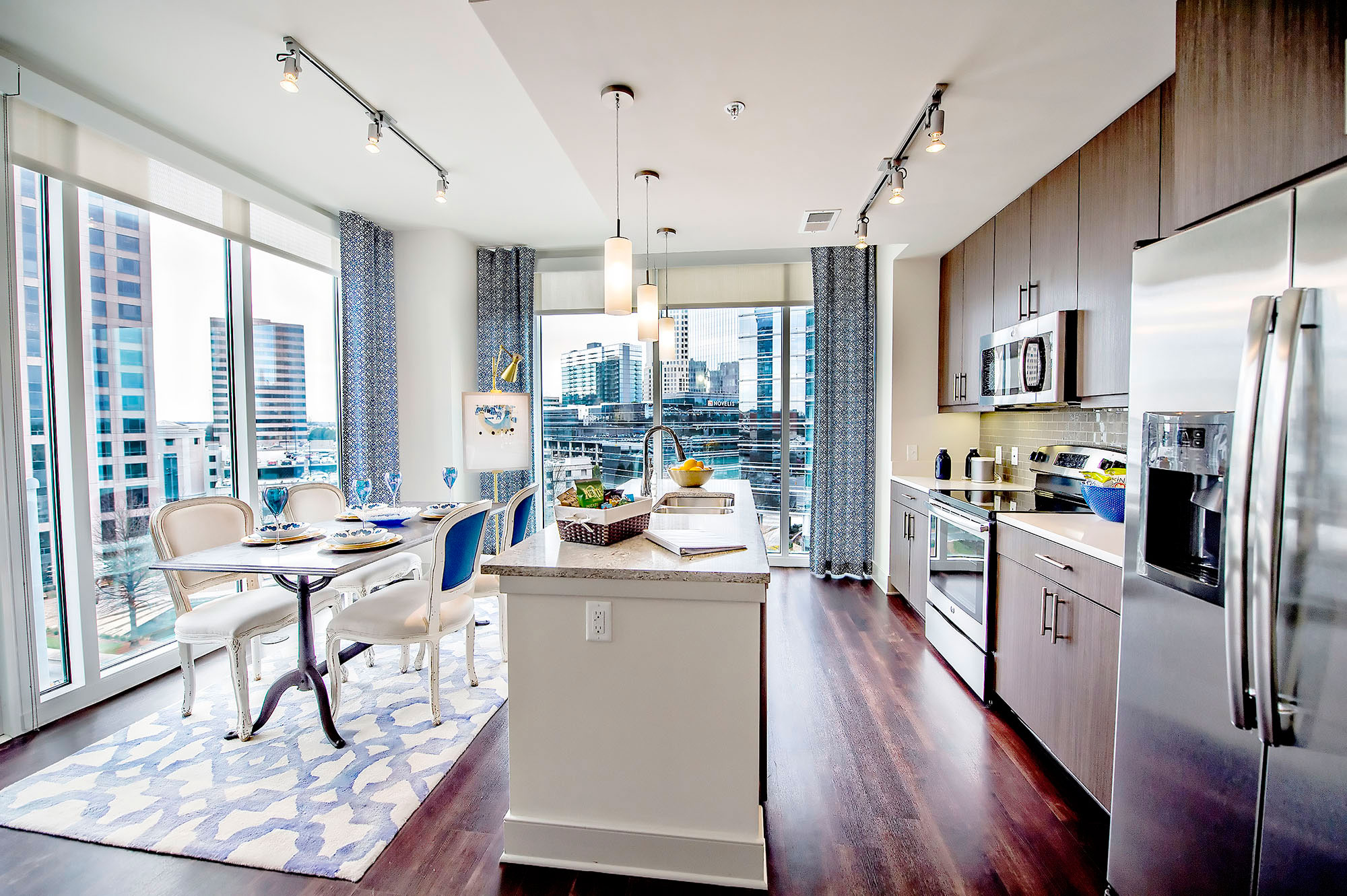
Interiors are patient subjects and demanding ones, both at the same time. A room won't smile on cue. It won't adjust its posture for you, won't turn toward the light like a person will when you ask nicely. It just sits there, exactly as it is, whether you're ready or not. So the whole job becomes finding the exact moment it looks its best — and being set up, camera ready, when that moment arrives.
That sounds simple but it isn't. It just requires a different kind of attention than most photography does.
Let the light tell you when
I'll often scout a space well before the actual shoot and simply watch. Not shoot — watch. I'll sit with a room for a few hours and pay attention to how daylight travels through it as the day goes on. Where it enters. How it moves across the walls. How it changes color as the hours pass.
There's usually a narrow window — sometimes twenty minutes, sometimes less — when the sun rakes low across a wall, or pools in a warm patch on the floor, and the room suddenly has depth and mood it simply doesn't have the rest of the day. Before that window, the space can look flat and ordinary. After it, the light's gone soft and the mood with it. But right in the middle of it, the same room looks like something worth photographing.
So I plan the shoot around that window rather than fighting it with artificial light. It would be faster, in theory, to just bring in strobes and manufacture the mood on demand, on my own schedule. But manufactured light rarely has the same quality as a room doing what it naturally does at 4:15 in the afternoon. I'd rather wait for the real thing and get it right than fake a version of it that's almost, but not quite, as good.
Everything else is discipline
Once the light's right, the rest of the job isn't about talent so much as it's about discipline: level horizons, clean lines, and a ruthless tidying of the frame before I ever press the shutter.
In an empty room, there's nowhere for clutter to hide. No crowd to stand in front of a crooked picture frame, no motion to distract the eye from a slightly tilted lamp. Every element in the frame is visible, permanent, and entirely your responsibility. A single stray cord, an off-kilter rug, a smudge on a window — in a busy scene, nobody would notice. In an empty room, it's the first thing the eye catches.
That's exactly what makes the good frames feel so calm. Not because calm is easy to achieve, but because it's the product of removing everything that isn't calm. Every line straightened, every object considered, every element in the frame there on purpose rather than by accident. The stillness isn't an absence of effort — it's the result of a lot of very deliberate effort, applied until it stops being visible.
So if you're shooting an interior, don't reach for the lights first. Watch the room. Learn when it's at its best, be there for it, and then spend the rest of your energy making sure nothing in the frame gets in its way.